In this review
Verdict
What you are paying for, and it is not the plate
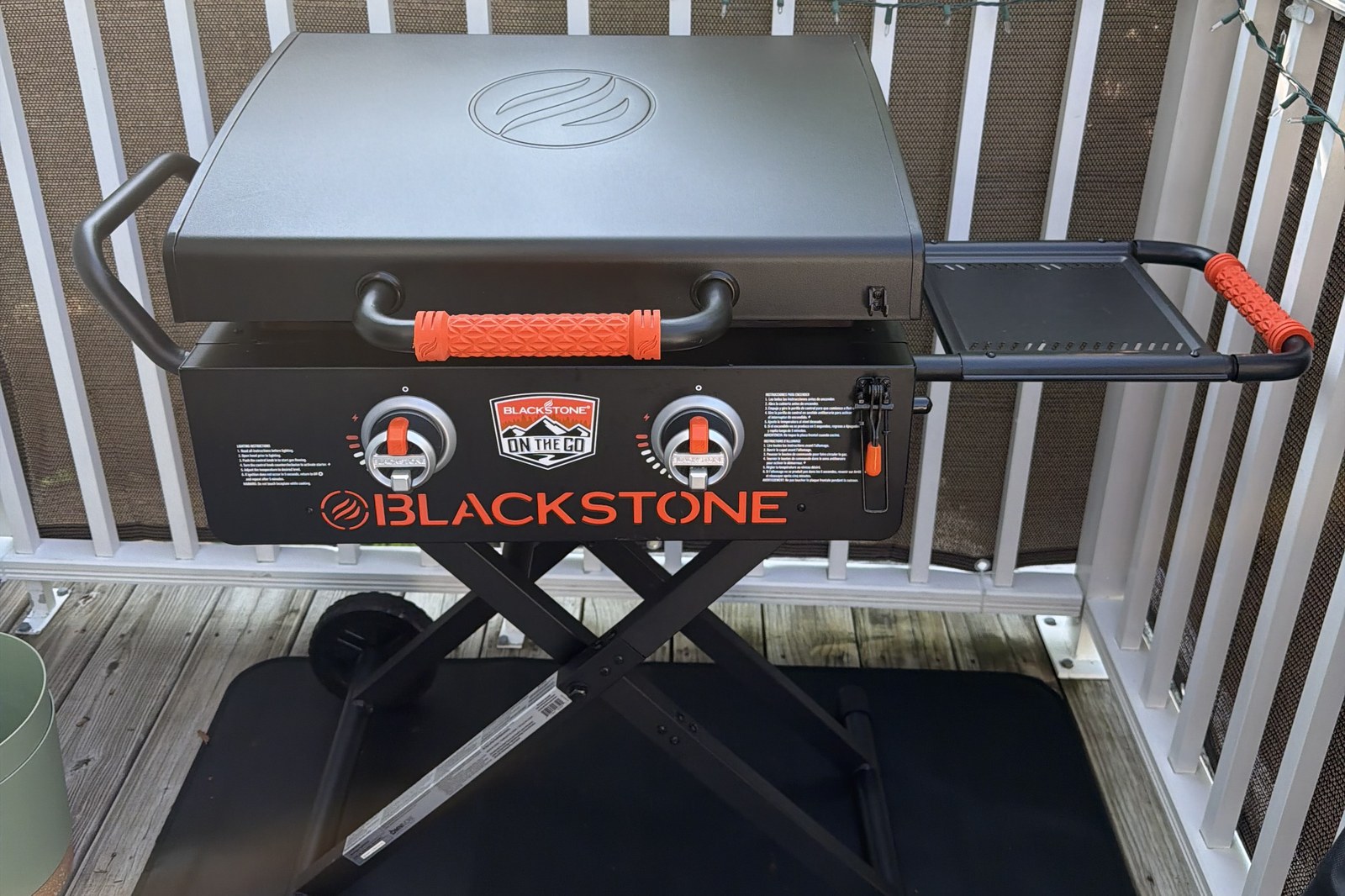
Model 1935 gets three things the tabletop does not: hood, wheels, side shelf. The wheels do the work. A tabletop griddle is a two-trip job, because you carry the griddle and then you go back and find something to stand it on. A card table. A cooler lid. The open tailgate, if you have made peace with that. This one folds flat and rolls.
That sounds minor until you count how often it decides whether the griddle comes out at all. A cooker that lives folded in the corner of a garage and sets up in one trip gets used most weekends. A cooker that needs furniture located first gets used twice in July and then remembered fondly in September. A griddle you can carry beats a table you have to find.
Plate width is identical either way, so none of this money buys cooking surface. It buys the ability to cook somewhere that has no furniture.
Two heat zones in a narrow space
Two knobs on the front panel means two burners you set separately, which is the whole difference between cooking breakfast and cooking breakfast in shifts. Eggs want low. Hash browns want high. On a single-control griddle you get one and then the other, and somebody eats cold eggs while being polite about it.
Two zones across 22 inches is tight. The cool end is a corner, not a half. Treat it as a parking space for what is already finished rather than as a second cook running alongside the first. That is the ceiling of the size class rather than a fault in this griddle, and the tabletop hits the same ceiling on the same plate.
The plate is bare steel, and that is a chore list
Nothing protects a flat top except the oil you put on it. Season it before the first cook. Wipe oil on after every cook after that. Skip enough of those and it rusts. That is the deal on every griddle in the griddles category, not a defect in this one.
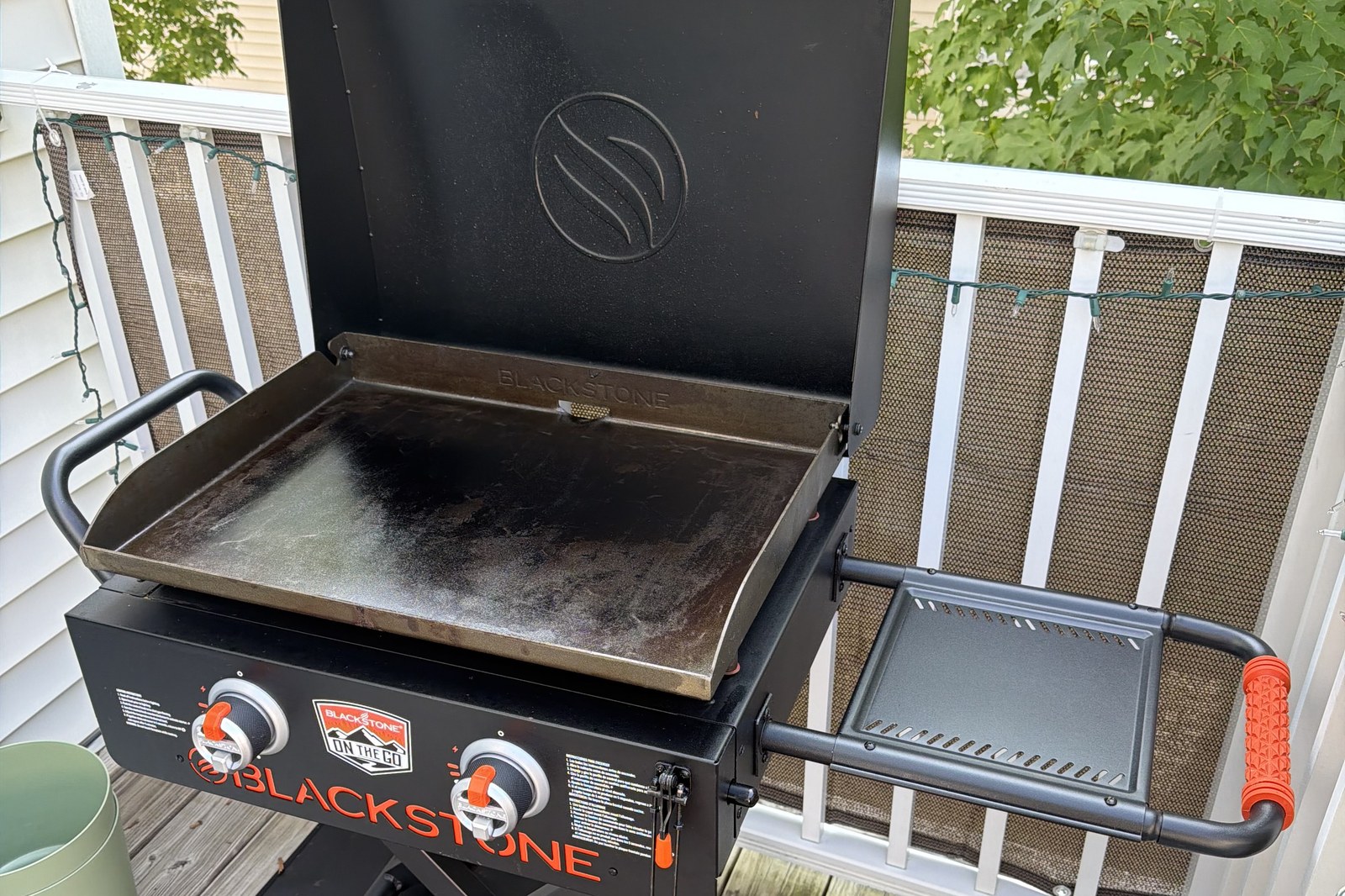
Seasoning also never looks like the catalogue photograph. It builds where the heat is, and on two burners the heat is two stripes, so you get two dark bands with a paler field between them that stays paler for months. The photographs on this page show a plate at exactly that stage. I have never met a bare steel plate that went evenly black, and knowing that in advance is worth more than finding out in month two and assuming you did it wrong.
Grease is the other half of the job. It leaves over the back edge rather than through a hole in the middle, and rear drainage is the better of the two arrangements by a distance. Nothing interrupts the cooking surface. There is no cup or slot to cook around, which on a plate this narrow would cost space you cannot spare. Rear drain beats a hole in the middle, and it is not close.
The cup underneath is still the part of griddle ownership that never makes the brochure. Small cups fill fast. Awkward cups spill somewhere between the griddle and the bin. Look at where it sits and how it comes off before you commit, because emptying it is a daily job rather than a seasonal one.
Storage is where portable griddles suffer
Rust first, and it happens in storage rather than in use. A plate put away damp comes back orange. A plate put away bare after a hard scrape comes back orange sooner. The hood helps with that, but a hood is a lid rather than a seal, so a griddle kept outside under a hood alone is still a griddle kept outside.
Flaking is second. Seasoning laid on thick and fast lifts in sheets later, usually on the morning you have people coming. Thin coats, fully heated, is the entire technique. It is boring and it works. A plate gets scraped back to bare steel by rust or by flaking, never by cooking.
Wind is third, and it belongs to the size class rather than to this model. Twenty-two inches of steel on folding legs does not weigh much, and an exposed car park pulls heat off a small plate faster than two burners put it back. Park it with something solid on the windward side and expect the exposed end to run cooler than the knob claims. Every portable cooker I have run in wind has cooked on a smaller area than its dimensions promised.
Check three things before the first cook. Both legs lock open and stay locked when you lean on the plate. The hood shuts onto the plate rather than onto the raised shelf. The cylinder threads onto the regulator cleanly by hand. A fitting that wants force is a fitting to stop and sort out with Blackstone, not one to lean on and hope.
Fuel and cleanup supplies
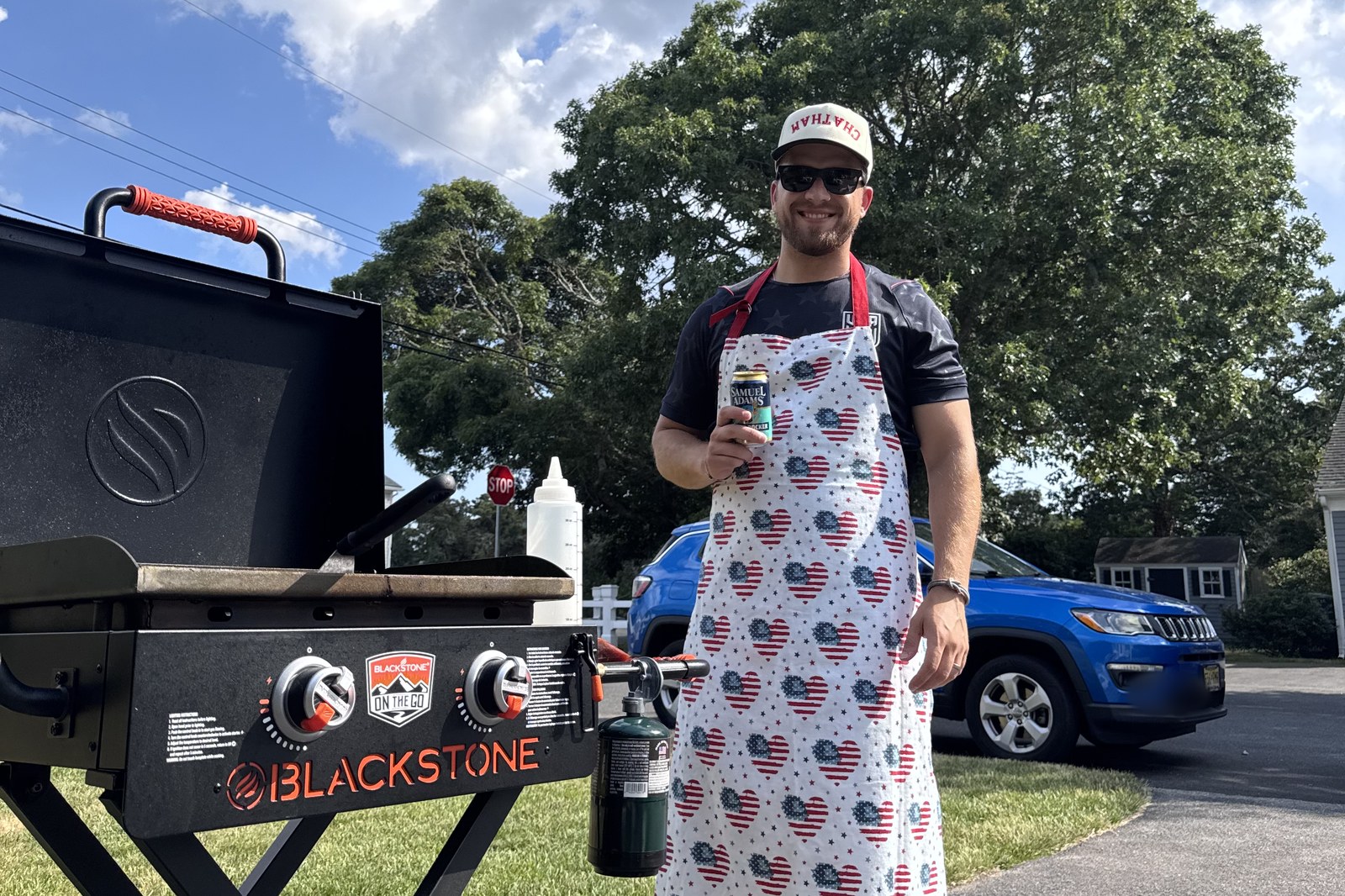
The cylinder in the photographs is the one pound bottle that threads straight into the regulator, and that is the whole fuel system. Nothing else is needed to cook, which is the entire argument for this size of griddle and the reason it works in a car park with no plumbing and no extension lead. It is also the format you buy two of and run out of halfway through the second round of pancakes. Buy four.
If you want to run something larger, use the accessory Blackstone lists for this SKU and nothing else. Do not improvise a connection to a bigger tank, and do not touch the regulator. Those fittings are a certification rather than a suggestion, and a propane appliance is the wrong place to discover you are handy.
The rest is small and constant. Oil, in more quantity than seems reasonable, because the plate wants it after every cook. A metal scraper, which is the tool the whole appliance is designed around. A squeeze bottle of water, because carbon steel cleans fastest while it is still hot. None of it is exotic. All of it is money after the sticker.
Buy the tabletop instead?
Buy the tabletop if you already own the table. Same plate width, so the cooking is the same, and the price difference goes to a folding chassis that would spend its life unfolded. A griddle living on a fixed outdoor counter gains nothing from scissor legs except two more moving parts that can seize.
Buy the legs if the answer to where it will stand is different every time. That is the whole decision. Neither one cooks better than the other, and any review that tells you otherwise is describing the wheels.
Either way, buy it as an addition. A flat top cannot run an indirect zone, so it does not stand in for a gas grill or a charcoal kettle. It does the jobs those two are bad at: breakfast, smash burgers, onions, and everything else that falls through a grate and lands in the fire.
The unit in these photographs